
End-to-End Security for Digital Finance: Quantum Stablecoins
Updated: Feb 25

The Risk Quantum Computing Has Over Digital Currencies
Stablecoins are becoming core instruments in financial systems. They are used for settlement, treasury management, remittance, liquidity routing and on-chain capital markets. As adoption increases, the underlying security assumptions move from technical detail to systemic importance.
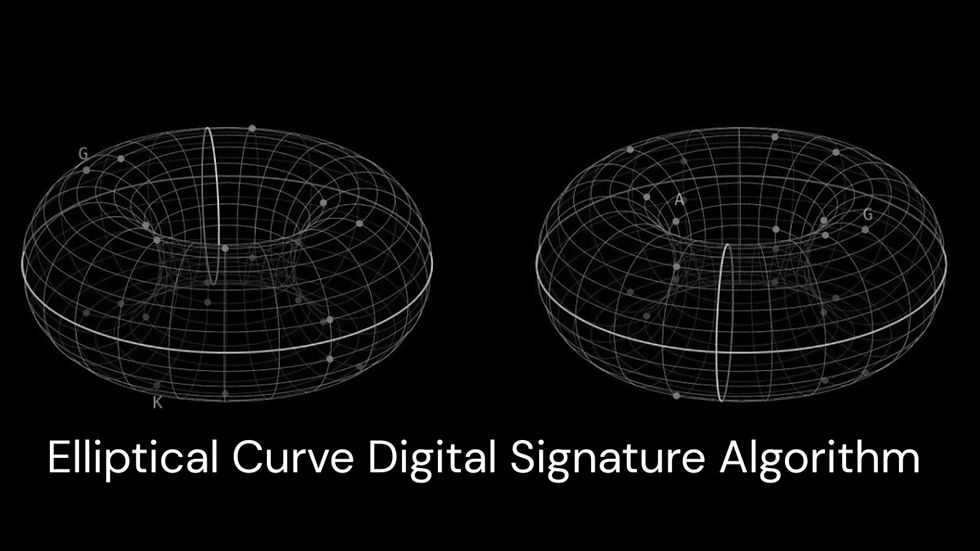
Most stablecoins today are issued on blockchains that rely on classical cryptography, particularly elliptic curve-based digital signatures (used by mainstream blockchains such as Bitcoin and Ethereum). These signatures authorize transfers and prove ownership of tokens. Their security depends on a mathematical equation that makes it almost impossible for classical computers to decrypt.
Quantum computing introduces a different computational model. Certain quantum algorithms are capable of solving the mathematical problems that underpin widely used signature schemes as it can simulate multiple variances simultaneously. This allows for private keys could be derived from public keys.
If private keys can be derived, transaction authorization can be forged. Ownership of digital assets can be reassigned without consent. In a stablecoin context, that means the integrity of circulating digital dollars depends on cryptographic assumptions that may not hold in a post-quantum environment.
Stablecoins issued on classical cryptography chains inherit risks because their security is tied to the security model of the underlying blockchain.
What this article is citing is a structural technology risk tied to computing advances. Financial infrastructure deployed today must remain secure across decades, not just the next product roadmap.

The Vulnerabilities of Stablecoins from CCE
In a classical cryptography environment (CCE), every token transfer is authorized by a digital signature. Once a wallet sends a transaction, its public key is exposed on-chain. That public key becomes the anchor of trust for future verification.
Stablecoins issued on classical cryptography chains inherit risks because their security is tied to the security model of the underlying blockchain. Blockchains who are not designed to be quantum-secure at its core will risk decryption with a powerful quantum computer. The reserve backing may be fully audited and regulated, yet the transfer layer remains cryptographically vulnerable in a post-quantum scenario.
Exchanges do not eliminate this risk either. Exchanges hold stablecoins in wallets on each blockchain they support. These wallets are subject to the same cryptographic assumptions as any other wallet. If the underlying chain relies on vulnerable signature schemes, exchange-held assets are exposed under the same model.
This creates systemic exposure. The risk is not limited to individual users. It affects custodians, trading venues, liquidity providers and institutional treasuries.
Because the cryptographic foundation of the chain is quantum-secure, the stablecoin minted on that chain inherits the same resilience. Ownership proofs remain secure even if quantum hardware advances.
Architecture of a Quantum-Secure Stablecoin
A quantum-secure stablecoin addresses this risk at the protocol layer. The underlying blockchain is built using post-quantum cryptographic primitives. Post-quantum cryptography refers to signature schemes designed to resist attacks from both classical and quantum computers.
In this architecture, transaction authorization is based on quantum-resistant signatures from genesis. Every wallet, validator and smart contract operates under these primitives. The security model does not depend on migrating fro classical to post-quantum schemes at a later stage.
Because the cryptographic foundation of the chain is quantum-secure, the stablecoin minted on that chain inherits the same resilience. Ownership proofs remain secure even if quantum hardware advances.
Exchange integration does not weaken this property. When an exchange lists a quantum-secure stablecoin, it generates wallets on the corresponding blockchain. Those wallets are governed by the blockchain’s signature scheme. If the chain uses post-quantum signatures, the exchange-held assets are secured under the same model.
Security in this context is native to the network. It does not depend on where the asset was purchased, traded, or custodied. The cryptographic guarantees follow the token because they are enforced by the protocol itself.

What We Do Differently At Quantum Chain
At Quantum Chain (QC), as a Layer 1 blockchain, we've designed our blockchain to be quantum-secure at its core. The main cryptography method utilized is the ZK-QARK Cryptography, which is proprietary to QC hybrid zero-knowledge, lattice-based cryptographic system. Lattice-based cryptography is inherently resistant to quantum attacks because its security relies on mathematical problems that remain hard even for large-scale quantum computers.
Unlike classical signature schemes such as ECC or RSA, lattice-based systems cannot be efficiently broken using Shor’s algorithm. ZK-QARK combines this lattice-based security with zero-knowledge proofs, allowing transaction validity to be verified without revealing sensitive information, maintaining both privacy and integrity. The system exceeds current NIST post-quantum standards by integrating hybrid proofs and optimizations tailored for high-throughput, institutional-grade blockchain operations.
Blockchains that claim quantum-security but are not designed for this security at the protocol level are still vulnerable to decryption.
Implications for Financial Institutions
A stablecoin that depends on cryptographic assumptions with a defined obsolescence curve introduces long-term uncertainty. On the other hand, quantum-secure stablecoins are engineered to remain secure over decades, supporting treasury systems, cross-border payments and on-chain financial products. For financial institutions, this means the following:
Reduced Transition Risk for Exchanges & Custodians – Integration with a quantum-secure chain eliminates the need for large-scale cryptography migrations, providing stable security assumptions even as technology evolves.
Investor Confidence Through Architecture – Unlike classical stablecoins, which carry embedded computational risk from potential quantum breakthroughs, quantum-secure stablecoins maintain integrity regardless of advances in quantum hardware.
Security Follows the Asset – Protection is inherent to the protocol, meaning stablecoins remain secure on any exchange or custody platform without additional adaptation.
Core Differentiator in Institutional Finance – Cryptographic resilience is no longer optional; it’s a fundamental requirement for digital dollars in the next generation of financial infrastructure.
Reach out to contact@quantumcha.in to star
Sources
1 Kurzgesagt – In a Nutshell. (2017, July 12). What is quantum computing? [Video]. YouTube. https://www.youtube.com/watch?v=6TI5YOpnrgI
2 Almuhammadi, S., & Alghamdi, S. (2025). A novel transition protocol to post-quantum cryptocurrency blockchains. Frontiers in Computer Science, 7. https://doi.org/10.3389/fcomp.2025.1457000
3 Palo Alto Networks. (n.d.). The quantum computing threat. In Quantum security concepts. https://docs.paloaltonetworks.com/network-security/quantum-security/administration/quantum-security-concepts/the-quantum-computing-threat
4 National Institute of Standards and Technology. (n.d.). What is post-quantum cryptography? https://www.nist.gov/cybersecurity/what-post-quantum-cryptography
5 Bantanidis, S., Master, K. H., & Shah, R. (2026). Quantum threat: The trillion-dollar security race is on (Citi Institute Report). Citigroup. https://www.citigroup.com/rcs/citigpa/storage/public/Citi_Institute_Quantum_Threat.pdf


Comments